About
Planetary radar, preserved for the next generation
PORPASS provides users with a web application designed to facilitate custom processing and simulations of planetary radar data. The overarching goal of PORPASS is to enhance mission legacy by providing custom processing and simulation of planetary radar datasets beyond the life of any particular orbiting planetary science mission, ensuring data and code longevity and relevance as well as opening the door to the next generation of researchers.
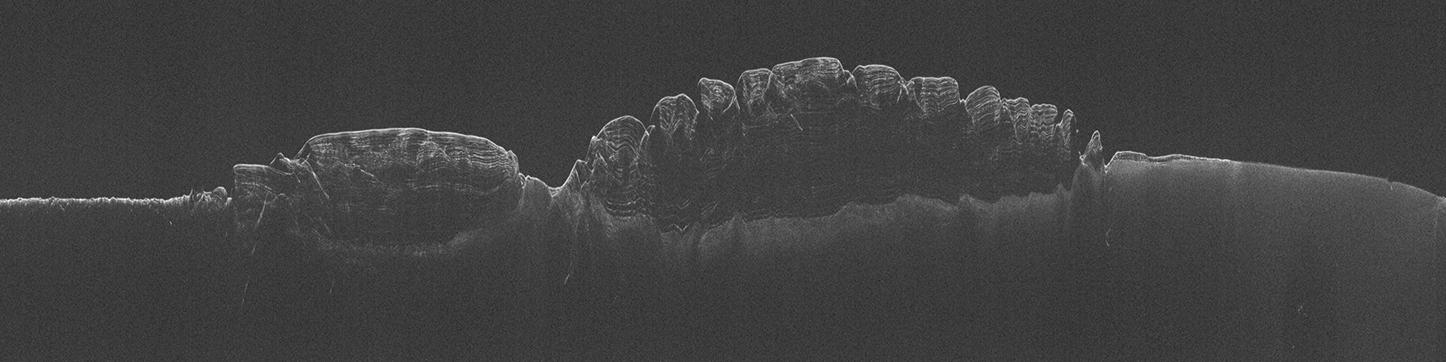
Instruments
Supported radar sounders
For this initial development, we focus our efforts on radar sounding data from SHARAD, MARSIS, and LRS.
SHARAD
The Mars Reconnaissance Orbiter Shallow Radar has been collecting information on the surface and subsurface of Mars since late 2006. SHARAD emits a 10-watt chirped pulse downswept from 25 to 15 MHz, yielding a 15-meter range resolution in free-space.
MARSIS
The Mars Advanced Radar for Ionosphere and Subsurface Sounding onboard ESA's Mars Express has been observing Mars since 2005. MARSIS operates in various modes; the 1-MHz bands centered at 3, 4, and 5 MHz are used for subsurface sounding.
LRS
The Selenological and Engineering Explorer's (Kaguya) Lunar Radar Sounder is a frequency-modulated continuous-wave sounder with a 2-MHz bandwidth centered at 5 MHz. LRS was in operation from 2007–2009.
Applications
Processing, simulation, and exploration
PORPASS features two main software applications as well as an interactive GIS environment.
GRaSP
The Generalized Radar Sounder Processor is the heart of PORPASS. All radar sounders operate under the same physics regime, allowing one to design a generic processor for any sounder system once the various instrument differences have been accounted for. GRaSP provides SAR processing to enhance along-track resolution and boost the effective signal-to-noise ratio.
OaRS
The Orbital Radar Simulator answers a long-standing issue in planetary radar sounder science: the lack of any publicly-available, open-source full-waveform radar simulator. Developed with the Center of Wave Phenomena at the Colorado School of Mines, OaRS lets users simulate radar data through free-form subsurface environments.
PORPASS GIS
An interactive geographic information system displaying radar ground-tracks over Mars and Moon basemaps. Users can select observations over regions of interest and configure bulk processing parameters directly from the map interface.
Open Source
Open Source for Open Science
The entire PORPASS application stack is fully open source and available via the PORPASS GitHub organization. If you wish to contribute, please review the documentation under each repository.
porpass/web
Web frontend of PORPASS, the Planetary Orbital Radar Processing and Simulation System. Browse and search SHARAD, MARSIS, and LRS observations, view them on an interactive map, and queue processing jobs for the porpass/daemon. Built in PHP + MariaDB + OpenLayers at the Planetary Science Institute.
porpass/db
The PORPASS database: schema/table definitions plus tooling to ingest radar sounder observations from PDS/DARTS archives, compute SPICE geometry, and maintain the catalog. The shared data layer behind porpass-web and porpass-daemon.
porpass/daemon
Claims queued GRaSP planetary-radar jobs from the PORPASS database, fetches their inputs, runs GRaSP, and writes products + a manifest to shared storage. Decoupled from the web app via frozen contracts + a shared filesystem.
porpass/grasp
GRaSP is a Python library for processing planetary radar sounder data. It runs as a standalone package on your own machine, and also serves as the processing backend for the PORPASS web application.
People
The PORPASS Team
The PORPASS Project is managed by Matthew R. Perry (PSI) on behalf of Principal Investigator Nathaniel Putzig (PSI). Other investigators involved in the development of PORPASS include Megan B. Russell (PSI), Gareth Morgan (PSI), Frederick Foss (Freestyle Analytical and Quantitative Services, LLC), Paul Sava (Colorado School of Mines), Dylan Hickson (Colorado School of Mines), Bruce Campbell (Smithsonian Institution), and Andrew Kopf (US Naval Observatory).
Request an Account
PORPASS is in active development. Access is available to collaborators and researchers — accounts are reviewed and approved by an administrator.
Resources